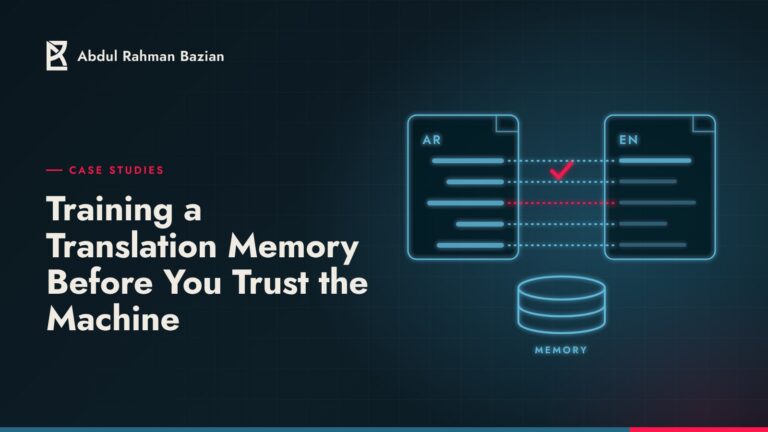
Training a Translation Memory Before You Trust the Machine
How Zadd Translate trained a MemoQ memory for two years, one per client, before trusting machine translation with demanding clients.

Eight qualities that separate a fixer foreign newsrooms keep from one they replace, from my work as SRF's stringer and fixer in Jordan.
Foreign correspondents live and die by the people who get them in the door. A good fixer turns a week in an unfamiliar country into a broadcast. A poor one turns it into missed interviews.
IN PRACTICE
My first job for SRF was getting the team into Baqura, a militarized zone Jordan had just taken back from Israel. It took connectivity, local knowledge and speed, all at once.
How Zadd Translate trained a MemoQ memory for two years, one per client, before trusting machine translation with demanding clients.
How templates, heading structures, keyword discipline and unique angles turned rewritten business news at Al Bawaba into content that ranks.
What Pilot Studios and Gojo Systems taught us about spinning teams out of Checkers Inc.: the partnership that worked, and the one…
I bring the access, the interpretation and the local knowledge, and I work to your deadline.