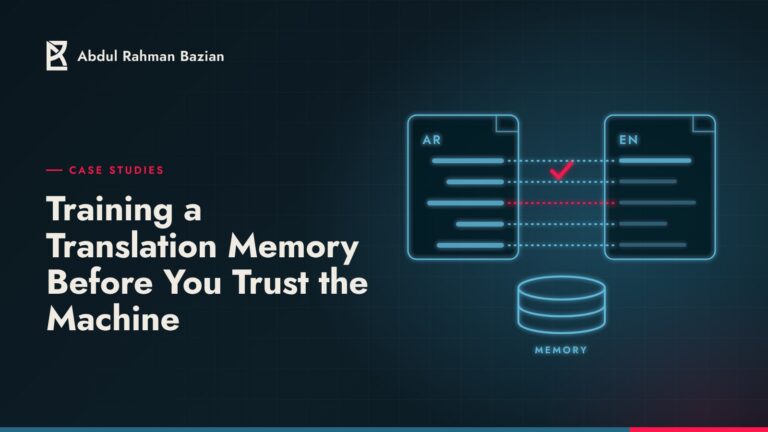
Training a Translation Memory Before You Trust the Machine
How Zadd Translate trained a MemoQ memory for two years, one per client, before trusting machine translation with demanding clients.

What Pilot Studios and Gojo Systems taught us about spinning teams out of Checkers Inc.: the partnership that worked, and the one that didn't.
As Checkers grew, we moved toward operational separation: specialist teams running as their own companies inside the Checkers group. Done well, it adds revenue streams and keeps experts invested. Done badly, it costs you the partnership.
A multimedia expert with years of experience at Al Jazeera, Al Araby TV and many other leading outlets joined us as a photographer and video editor.
He is now a partner in Pilot Studios, owning 25% on an ESOP basis. He is bringing in major projects and productions over the coming months.
WHY IT WORKED
He worked inside the team first, then earned his stake through the ESOP. By the time he became a partner, he already shared the culture.
In 2026, we brought an independent contractor into Gojo Systems as a partner, alongside the partners already there. The set-up was a cooperative stakeholder model, with Checkers Inc. owning 50%.
Contractors in that set-up often come to dislike Checkers holding half the company. This one did. Despite the work done, the partner joined and left within two months.
How Zadd Translate trained a MemoQ memory for two years, one per client, before trusting machine translation with demanding clients.
How templates, heading structures, keyword discipline and unique angles turned rewritten business news at Al Bawaba into content that ranks.
How SmarTax, an app rewarding citizens for asking for tax invoices, reached the final two in a government bid and still cost…
I help startups, SMEs and cooperatives plan growth that holds when markets turn.