Two agencies in Amman can quote the same client for the same month of social media work. One asks JD 150. The other asks JD 950. That second agency isn’t charging more for posts. It’s charging for judgment.
That gap is what value based pricing is about, and it’s the most reliable way out of the price war.
A Value Based Pricing Strategy in Plain Terms
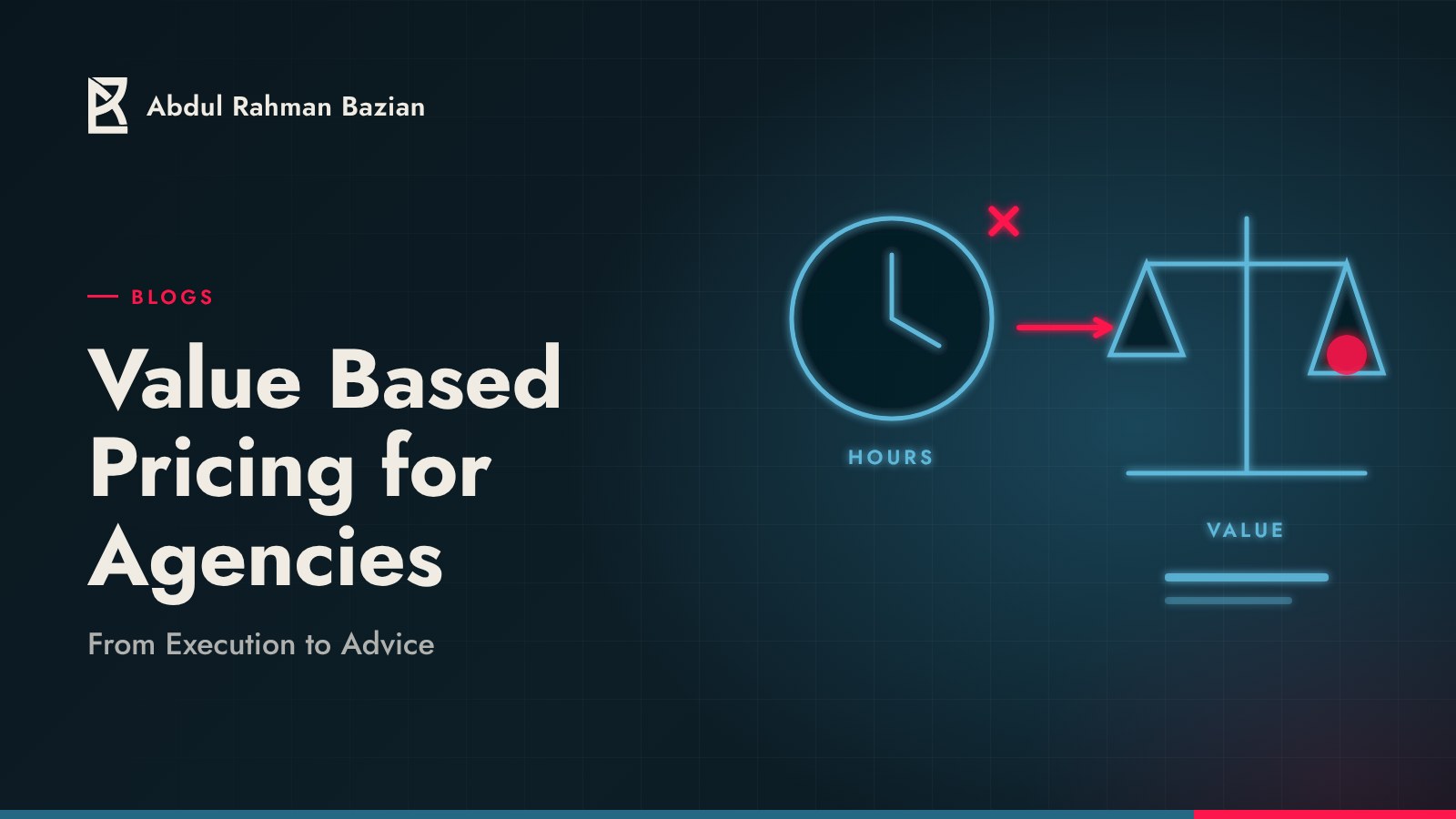
Value based pricing sets your price by the value of the outcome to the client, not by the hours or items you deliver. It only works when clients trust your judgment, which is why it goes hand in hand with moving from execution to advice.
Why Execution Work Defeats a Value Based Pricing Model
Execution is easy to compare. A reel is a reel, a post is a post, and a buyer can line up ten quotes in an afternoon. When the work looks the same, price becomes the only difference.
Our own look at the Amman market shows the result: a crowded bottom tier and a thin top one. The firms at the top aren’t selling more posts. They’re selling strategy.
Clients notice value more than price, too. When deals are lost, 35% are blamed on poor value for money, and 37% on no product fit. Neither says “too expensive.”
Three Habits Behind Value Based Pricing Examples
Firms that price on value share three habits. They define the outcome before the deliverables. Diagnosis comes before production. And they are trusted before they quote.
- Execution: “Twelve posts and four reels a month.”
- Advice: “A content plan that gets you onto the shortlist of the three companies you want as clients this year.”
- The difference: the second can be priced on what those clients are worth.
How a Strong Brand Supports a Value Based Pricing Model
Price only follows value when buyers believe you. Les Binet puts it plainly: the stronger the brand, the lower the price elasticity, and the greater the pricing power. Analysis of the IPA databank shows the same link between brand building and lower price sensitivity, though mostly in consumer markets.
In B2B, the evidence points to people. Only 14% of business buyers will pay a premium for business value alone. They are eight times more likely to pay one when there is personal value, like a trusted recommendation. That research is from 2013, but the pattern still holds.
The Bottom Line on Value Based Pricing Consulting
You can’t raise prices by announcing you’re strategic. Firms earn the right by being trusted, then you price the outcome, not the hours.
Takeaways for Agencies Moving to Value Based Pricing Strategy
- Sell the outcome first. Deliverables come second.
- Diagnose before you produce. Advice is where value is visible.
- Build trust before you quote. Advocacy makes premiums possible.
- Leave the bottom tier gradually. Move clients up as trust grows.
In Conclusion
Value based pricing isn’t a pricing trick. It’s what happens when clients stop buying your time and start buying your judgment. Getting there takes trust, and trust takes time.